The useful answer arrives too late
A live-chat team cannot cover every hour, every product, and every language. When the answer takes hours, the cart usually cools first.
Mikabot is a product-aware chat assistant for online stores. It reads the catalog, answers in the shopper's language, and turns hesitant browsing into a clearer buying path.
Most online stores lose intent in quiet places: a question sits unanswered, a support inbox fills with repeats, or search fails because the shopper does not know the store's vocabulary.
A live-chat team cannot cover every hour, every product, and every language. When the answer takes hours, the cart usually cools first.
"Is this in stock?" "What size should I pick?" "Do you ship to Germany?" Those questions matter, but they should not consume the people needed for complex cases.
Keyword search is brittle when customers describe needs instead of product names. A good store needs guided discovery, not another empty result page.
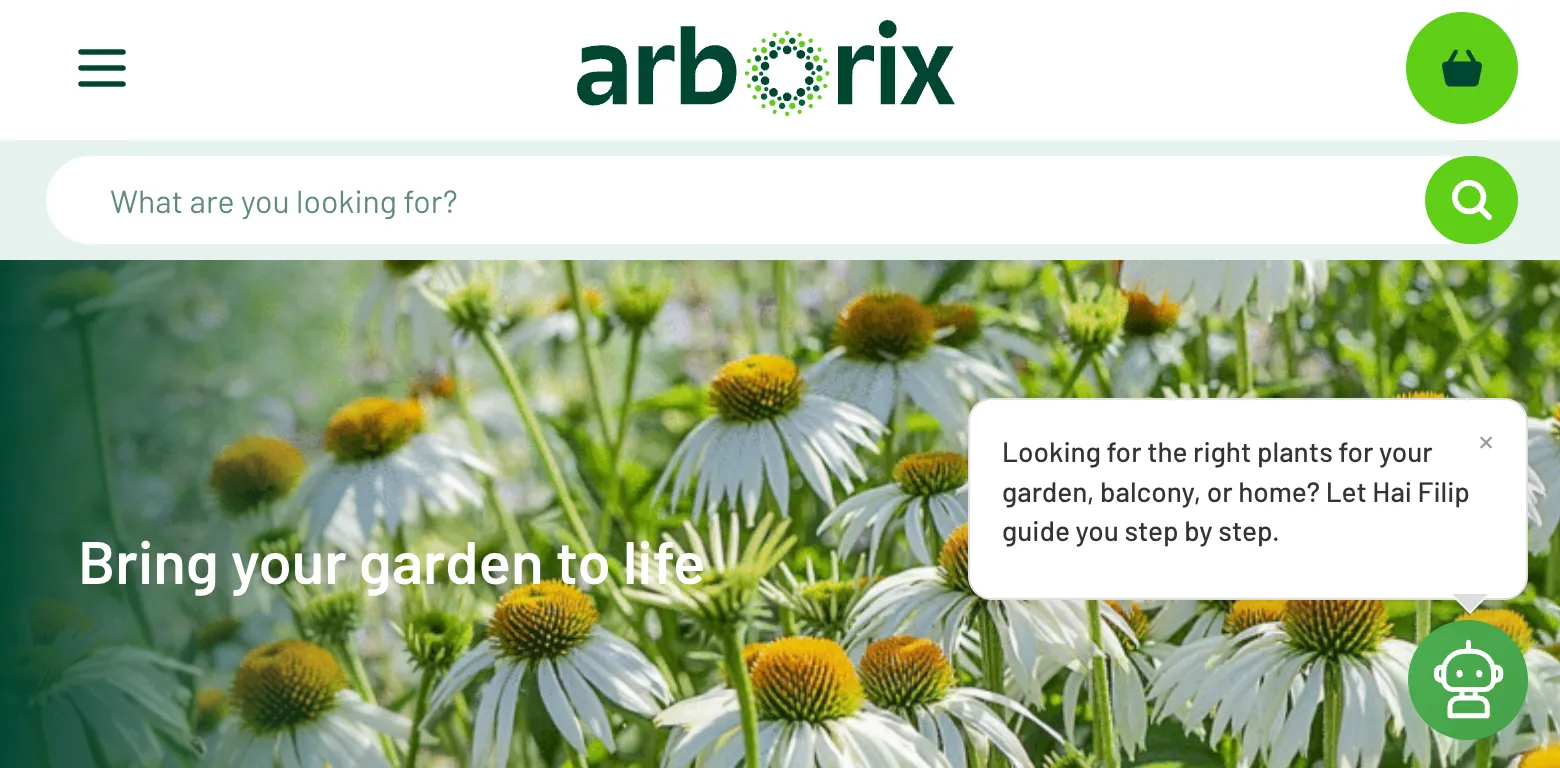
In 2025 we put a Mikabot chatbot live on Arborix, a fast-growing garden and plant webshop. The first job was narrow: help visitors find the right plant by asking what they needed.
The chat quickly became more useful than the standard search bar. People asked for shade plants, pet-safe plants, gifts, and care advice in normal language.
That was the signal. The same pattern exists in fashion, electronics, furniture, food, services, and every catalog where the customer has a need before they have a product name.
We think every business deserves a sales assistant that actually knows the products, whether that business is a one-person Shopify shop, an established webshop or a multi-brand agency.
Most chatbots are FAQ pages with a chat bubble. Mikabot is built around the harder job: reading product data, asking useful follow-up questions, and recommending something the customer can buy.
The goal is practical: make strong product guidance affordable enough for normal stores, so owners can spend less time repeating answers and more time improving the business.
One script tag, no server integration.
The operating principles behind how we build Mikabot.
Language models sit at the core of the product because conversation and product guidance need judgment. We do not add AI where a simpler rule would be better.
Mikabot is built for online stores, not retrofitted from a generic support desk. Stock, variants, descriptions, languages, and product links shape the product.
Belgian-built, EU-hosted, and designed with GDPR expectations in mind. Privacy and data boundaries are product requirements, not legal footnotes.
We work with customers directly. The best improvements usually come from real conversations, awkward edge cases, and catalog details that did not fit the first model.
A feature earns its place when it improves a business result: better answers, fewer repeats, clearer recommendations, or more useful analytics.
Stores change. Catalogs grow. Traffic shifts. Mikabot is maintained as an operating product, not a one-time widget install.
Create an account to get started. Or contact us first if you have a question.