

AI Chatbots vs. Live Chat: What Actually Works for E-commerce in 2026
If you run an online store, you know this moment: support tickets spike, the queue grows, and buyers are waiting.
A practical setup is simple. Use AI for routine traffic first, and keep humans focused on conversations where tone, exceptions, and judgment matter.
80% of e-commerce businesses now use some form of chatbot, according to Juniper Research. But many consumers still prefer talking to a real person for complex requests. That is why the real decision is often hybrid, not binary.
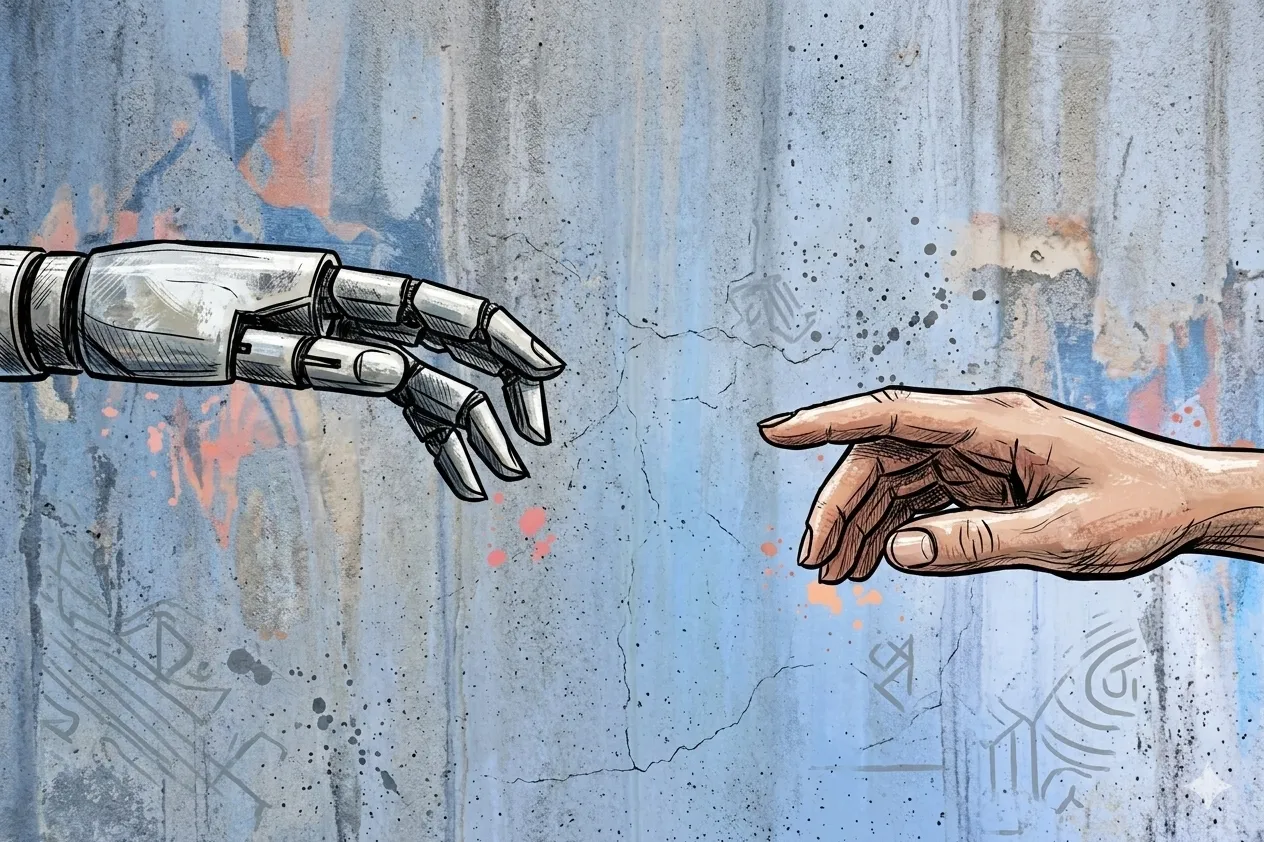
The Numbers at a Glance
12x
Lower cost per interaction with AI chatbots vs. human agents - $0.50 vs. $6.00 on average
88%
Customer satisfaction rate for live chat - the highest of any digital support channel
3x
Faster average response time with AI chatbots compared to human agents - instant vs. 40-second first reply
89%
Of consumers favor a hybrid approach combining AI speed with human empathy - Fullview 2025 Report
Where AI Chatbots Are the Better Fit
Modern AI chatbots handle a lot of routine support without sounding mechanical. The better ones answer with catalog context, order status, and policy logic in the same flow.

24/7 Availability
Cover outside-office hours, weekends, and holidays with consistent support coverage so you do not lose momentum when buyers shop outside business hours.
Peak Traffic Handling
Holiday spikes and product launches create long queues. AI can absorb routine traffic so human teams can focus on exception cases during surges.
Multilingual Coverage
AI reduces language friction in routine support. A single bot can cover standard languages quickly, with confidence improving as data and prompts mature.
Consistency and Accuracy
AI can deliver consistent, standards-based responses when your policy and catalog data are reliable. Accuracy still depends on how well those sources are maintained.
Real Revenue Impact
Recent deployments usually improve routine coverage when routing and handoff are set up correctly. In one published case, a retailer reported stronger conversion from AI-assisted routine chats, while still keeping humans involved for escalations. We consistently see the biggest lift in chats about order status, shipping, and returns.
On the cost side, AI interactions are often significantly cheaper: $0.50 on average vs. around $6.00 for human agents - and some advanced AI platforms report $0.03-0.25 per minute. Gartner projects that agentic AI will autonomously resolve 80% of common service issues by 2029, which is useful context for operators scaling support capacity.
Where Human Agents Still Win
There are still situations where a human agent delivers something a chatbot cannot replicate. Different tasks call for different channels, and matching task to channel reduces avoidable frustration.
A survey of over 1,000 U.S. consumers found that 61% feel human agents better understand their needs, 53% say humans provide more thorough explanations, and 52% find humans less frustrating to deal with. Only 8% of customers prefer AI over humans for customer service overall.
Emotional Complexity
A damaged order or wrong item is often emotional, especially when a customer is stressed. Those moments usually need patient explanation and tone control - areas where people still outperform bots.
High-Value Deals
When a customer is about to place a €2,000 furniture order and has specific questions about delivery, assembly, and returns, the stakes demand a human touch. Conversion rates on high-ticket items remain higher with live assistance.
Complex, Multi-Step Issues
Warranty claims, custom orders, international shipping complications - situations that require judgment, policy exceptions, or coordination across departments are still handled best by experienced agents.
Trust and Transparency
A Q4 2025 study found that 14% of consumers would lose trust if they discovered an AI agent didn’t disclose it was AI. And 81% believe AI is used primarily to cut costs, not improve service.
Head-to-Head Comparison
| Dimension | AI Chatbot | Live Chat (Human) | Hybrid (AI + Handoff) |
|---|---|---|---|
| Availability | 24/7/365 | Business hours only | 24/7 with escalation |
| Response Time | <2 seconds | 23-40 seconds avg. | Instant + queue for complex |
| Cost per Interaction | $0.50 avg. | $6.00-8.00 avg. | $0.80-1.50 blended |
| CSAT Score | 80% avg. | 88% avg. | 87-90% avg. |
| Scalability | Unlimited concurrent | Limited by headcount | AI absorbs volume spikes |
| Multilingual | Auto-detect, any language | Requires multilingual staff | AI covers all, humans for key markets |
| Emotional Intelligence | Limited | High | AI triages, humans handle sensitive |
| Complex Issue Resolution | Basic to moderate | Advanced | Best of both |
Sources: Teneo AI, LiveChat, Master of Code, Nextiva
The Hybrid Model: Why “Both” Is the Right Answer
Most comparisons treat this as a yes/no decision. In real stores, teams usually blend both.
89% of consumers want a combination of AI speed and human empathy. 80% of people say they will only use a chatbot if they know a human option exists. Some cited studies also show that poor first-bot experiences can increase the chance of switching channels.
In practice, the hybrid model routes routine conversations (product questions, stock checks, order tracking, shipping info) to AI, and saves humans for complaints, exceptions, and moments that affect trust.

- AI first: Fast answers for routine questions with 24/7 coverage
- Smart detection: AI recognizes when a conversation needs a human
- Context handoff: Full conversation context transfers to the agent
- Agent efficiency: AI pre-qualifies issues, so agents spend time solving - not asking
A Practical Decision Framework
Not sure which interactions to route where? Start with this rule: if a question can be answered with known data, send it to AI; if it needs judgment, send it to a person.
Let AI Handle It
Product search and recommendations, size and stock availability, shipping status and delivery estimates, store policies and FAQs, multilingual greeting and routing, after-hours coverage, promotional and discount inquiries.
Route to a Human
Complaints about damaged or wrong items, high-value purchase consultations (€500+), warranty and refund disputes, custom or bulk orders, emotionally charged conversations, requests that require policy exceptions.
AI-Assisted Handoff
AI collects initial details and context, pre-fills order and customer info for the agent, suggests solutions based on similar resolved tickets, agent picks up mid-conversation with full history - no customer repetition.
The Cost Reality Check
Let’s do simple math for a mid-sized e-commerce store handling 3,000 customer conversations per month.
| Model | Monthly Cost (est.) | Coverage | CSAT |
|---|---|---|---|
| 100% Human Agents | $18,000-24,000 | Business hours, 1 language | 88% |
| 100% AI Chatbot | $150-500 | 24/7, multilingual | 80% |
| Hybrid (AI + 1-2 agents) | $2,000-4,500 | 24/7, multilingual, empathetic | 87-90% |
The hybrid model can reduce cost materially compared with fully staffed operations, with results varying by traffic mix and implementation. It also avoids the cautionary tale of Klarna, which made headlines for replacing human agents with AI, only to start rehiring when customer satisfaction dropped. Gartner now predicts that 50% of companies that cut support staff for AI will rehire by 2027.
The lesson: AI expands what your team can handle, not who your team can replace.
What to Look for in a Hybrid Chat Solution
If you are evaluating tools, use this filter: does the platform improve routing, handoff, and trust, or does it just automate a basic FAQ?
Product Awareness
The bot should understand your full catalog - names, variants, pricing, stock levels - not just keyword-match against a static FAQ.
Context Handoff
Conversation context, customer details, and chat history must transfer to the human agent instantly - no “please explain your issue again.”
Real Multilingual Support
Auto-language detection and native responses - not machine-translated templates that read like a phrasebook.
Privacy and Compliance
For European stores, GDPR compliance is non-negotiable. Look for EU-hosted solutions with clear data processing agreements.
Actionable Analytics
Conversation volume, resolution rates, handoff frequency, CSAT scores, and revenue attribution - you need data to optimize the AI-to-human ratio.
Easy Integration
One-line embed or native plugins for Shopify, WooCommerce, and other platforms. If setup takes more than a day, it is too complicated.
Frequently Asked Questions
Will an AI chatbot hurt my customer satisfaction scores?
How do customers feel about talking to a bot?
What percentage of conversations can AI handle without a human?
Is it expensive to run a hybrid setup?
How long does it take to set up an AI chatbot for my store?
Does this model support the hybrid AI + human approach?
Ready to See the Hybrid Approach in Action?
Most stores improve when routine questions move out of the queue and humans keep solving the exceptions. If your split is still fuzzy, define it this week, before growth forces it for you.
No credit card · Set up in minutes